Seeing winged insects inside your Sarasota home in September? Schedule a professional termite inspection if you notice equal-length wings, mud tubes, frass pellets, hollow-sounding wood, or swarmers emerging indoors. Winged ants are common lookalikes, but termites can cause serious structural damage before the problem becomes obvious.
September brings warm temperatures, high humidity, heavy rain, and hurricane-season moisture to Southwest Florida. Those conditions can encourage termite activity and drive hidden colonies to swarm. Here is how to tell the difference and when to call a local professional.
Why Does September Bring Termite Swarms in Sarasota?
Termite swarmers are winged reproductive termites that leave an established colony to start new colonies. In Sarasota, late summer and early fall create the warm, damp conditions termites prefer. Drywood termites may swarm around windows, lights, and doors, while subterranean termites can become more active around damp foundations, wood-to-soil contact, and storm-affected areas.
Formosan termites are a particularly aggressive subterranean species. Their activity can vary by weather and location, but warm nights after rain may trigger swarming. Hurricane activity can also create moisture problems around roofs, crawl spaces, foundations, and damaged exterior wood.
A swarm does not mean every termite will successfully establish a new colony. It does mean termites may already be present in or around the structure. That makes a termite inspection Sarasota homeowners can trust an important next step.
How Can You Tell Winged Ants and Termites Apart?
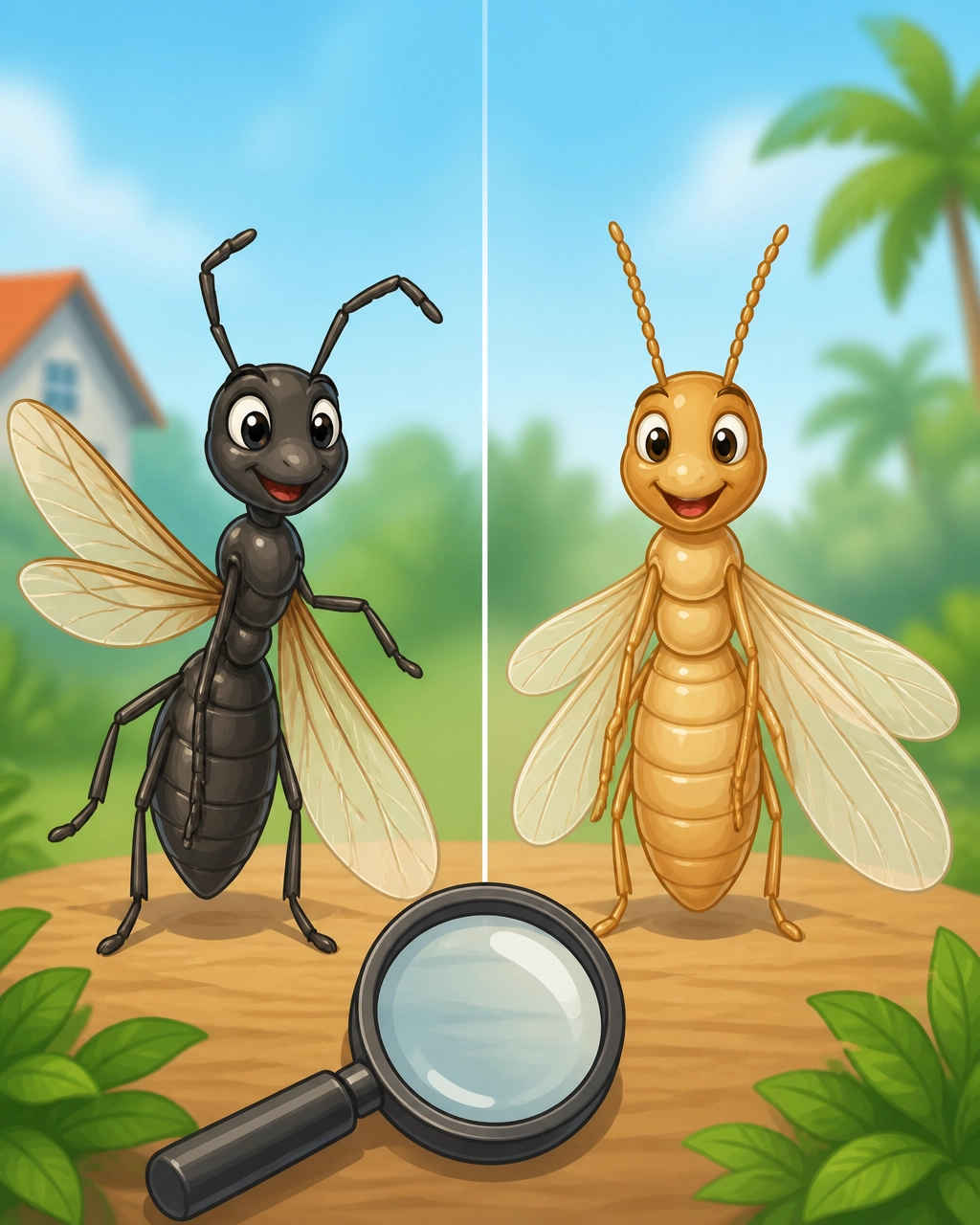
Winged ants and termites can look similar at first glance. Use these three quick identification clues:
| Feature | Winged ants | Termites |
|---|---|---|
| Waist | Narrow, pinched waist | Thick, straight body |
| Antennae | Bent or elbowed | Straight and bead-like |
| Wings | Front wings longer than rear wings | Four wings are equal in length and shape |
Termites also shed their wings quickly after swarming. Finding piles of matching wings on a windowsill, near a light fixture, or beside a door frame is a strong reason to schedule a termite inspection Sarasota service.
If possible, save a few insects in a small container or take clear photos from above and from the side. A professional can identify the insect and determine whether the activity is coming from inside the home, the foundation, nearby landscaping, or another structure.
For a detailed visual comparison, review this winged ant and termite identification guide from Kansas State University.
What Are the 7 Warning Signs You Need an Inspection?
1. You Find Piles of Discarded Wings
Termite swarmers shed their wings after landing. Look for small piles of equal-length, translucent wings around:
- Windowsills
- Door frames
- Light fixtures
- Baseboards
- Sliding-glass-door tracks
- Spider webs near windows
You may not see the swarm itself. The wings can remain as evidence after the insects disappear.
2. You See Mud Tubes on the Foundation
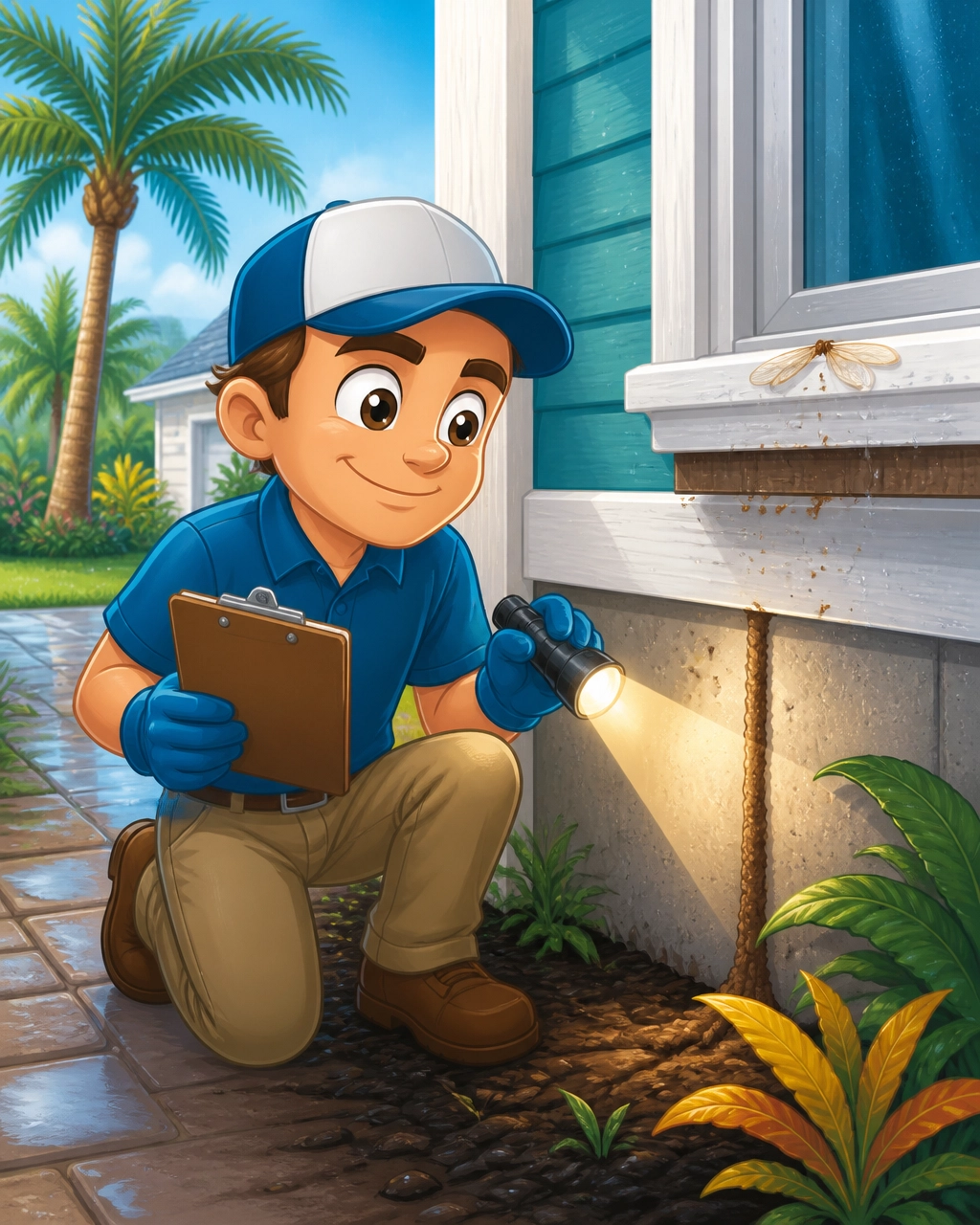
Subterranean termites build narrow shelter tubes from soil, saliva, and debris. These tubes protect termites as they travel between the ground and wooden parts of your home.
Check your foundation, slab edges, support piers, utility penetrations, steps, and exterior walls. Fresh tubes may look damp or intact. Older tubes may be dry or cracked, but they still deserve professional evaluation.
3. Wood Sounds Hollow When Tapped
Termites consume wood from the inside out. Tap suspicious areas, including trim, baseboards, window frames, door frames, and exposed structural wood. A hollow sound, soft spot, or area that breaks easily may indicate hidden galleries.
Avoid relying on a casual visual check. Termite damage often stays concealed behind paint, drywall, insulation, flooring, or trim.
4. You Find Frass or Pellets Beneath Wood
Drywood termites do not need soil contact. Instead, they live inside dry wood and push waste pellets, known as frass, through tiny openings.
Frass may look like coarse sand, coffee grounds, or fine sawdust. Look for small piles beneath:
- Window and door frames
- Baseboards
- Attic wood
- Built-in cabinets
- Wooden furniture
- Ceiling or wall trim
Frass is one of the most useful clues pointing toward drywood termite activity. It is also a clear reason to arrange a termite inspection Sarasota homeowners should not postpone.
5. Doors or Windows Suddenly Stick
Sticking doors and windows can have many causes, including normal settling, humidity, or moisture damage. However, buckling, blistered paint, uneven trim, or unexplained changes around wood openings may also signal termite damage.
Pay close attention after heavy rain or a storm. Moisture can expose existing weaknesses and create conditions that help subterranean termites move closer to the structure.
6. You See Swarmers Inside the Home
A few flying ants near an open door may simply have wandered inside. A cluster of winged insects emerging from a wall, ceiling, baseboard, window frame, or light fixture is more concerning.
Indoor termite swarmers may indicate an active colony within the structure or immediately beneath it. Vacuum visible insects, save a sample if possible, and schedule a professional inspection rather than spraying and waiting.
7. Your Home Has Moisture or Wood-to-Soil Contact
Termites take advantage of preventable conditions. Inspect areas where:
- Gutters overflow against the foundation
- Irrigation sprays directly onto walls
- Mulch touches siding or wood trim
- Landscape timbers contact the home
- Plumbing leaks create damp wood
- Storm damage leaves gaps or exposed framing
- Vents or crawl spaces stay humid
These conditions do not prove an infestation, but they increase risk. Correcting moisture and access points is an important part of long-term termite prevention.
Why Do Florida Homes Need Annual Termite Inspections?
Florida’s warm climate allows termite activity during much of the year. A home may appear perfectly healthy while termites work behind walls, beneath flooring, inside attic framing, or within exterior trim.
An annual inspection can help identify:
- New mud tubes or shelter routes
- Early drywood termite frass
- Wood-to-soil contact
- Moisture conditions
- Previous damage
- Areas vulnerable after storms
- Signs of activity that homeowners cannot easily see
Annual inspections are especially valuable for older homes, homes with additions, properties near wooded areas, and houses that have experienced leaks, flooding, or storm damage.
The University of Florida’s termite resources explain why species identification and professional evaluation matter when choosing a treatment approach.
What Does a Professional Termite Inspection Include?
A thorough inspection should examine more than the room where you found wings. A trained technician evaluates the home’s interior, exterior, foundation, accessible attic or crawl-space areas, and likely moisture sources.
At Blue Frog Lawn & Bugs, the process may include:
- Discussing what you observed, including the date, location, weather, and time of day.
- Checking interior areas such as windows, doors, baseboards, trim, closets, garages, and accessible attic spaces.
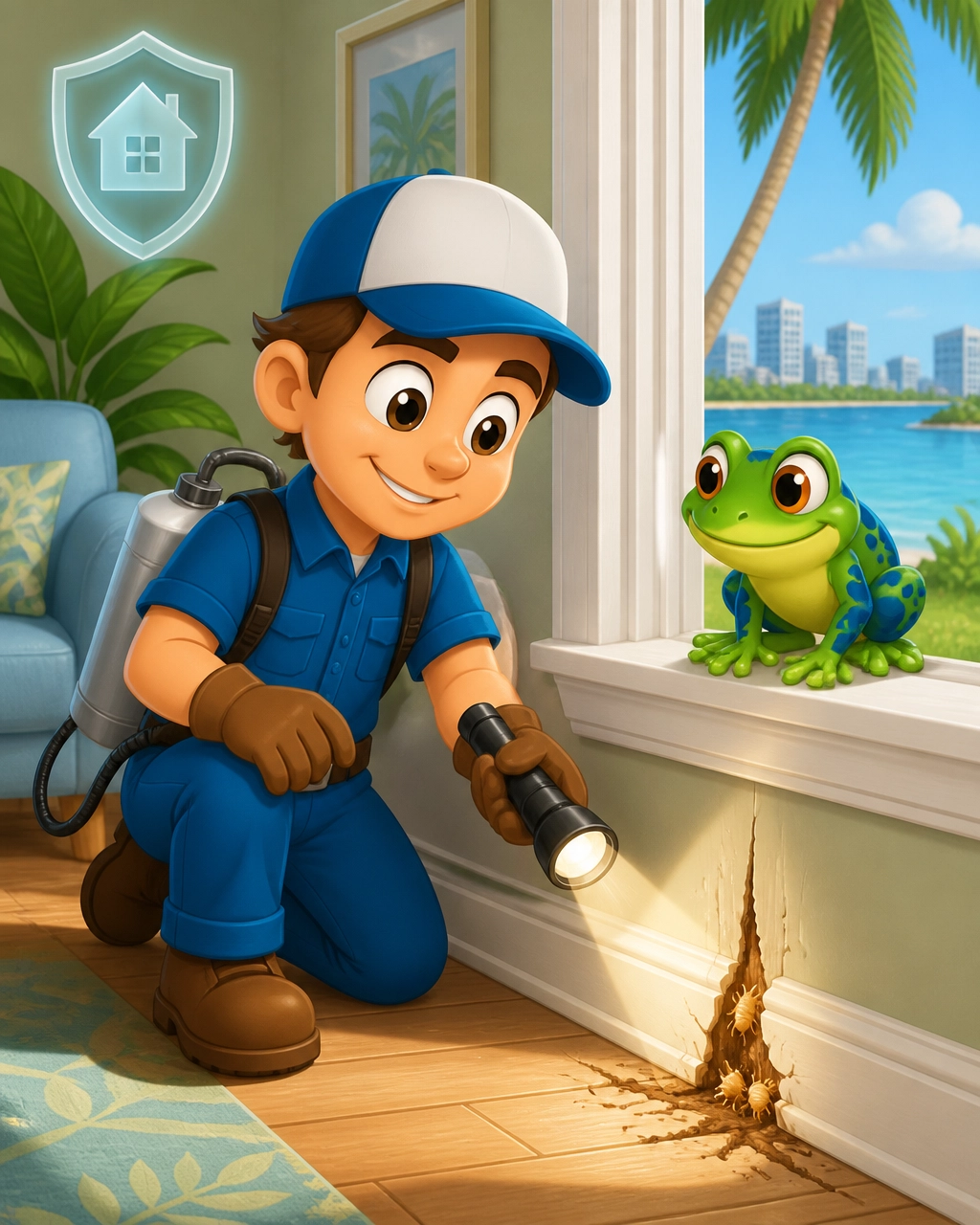
- Inspecting the exterior for mud tubes, damaged wood, cracks, moisture, and wood-to-soil contact.
- Looking for drywood evidence, including frass, kick-out holes, wings, and galleries.
- Identifying the likely pest and conditions, rather than treating every insect the same way.
- Explaining your options clearly, including prevention, monitoring, and treatment recommendations.
Blue Frog uses an Integrated Pest Management, or IPM, approach. That means technicians look for the source of the problem and combine targeted treatment with practical prevention steps. Our state-licensed and UF IFAS-trained team serves Sarasota, Bradenton, Venice, Nokomis, Osprey, and surrounding communities.
Frequently Asked Questions About Termite Inspections in Sarasota
Are all winged insects in my home termites?
No. Winged ants are common. Check the waist, antennae, and wing lengths, but schedule an inspection if you see equal-length wings, indoor swarming, or other signs of termite activity.
Is September a good time for a termite inspection?
Yes. September’s heat, humidity, rain, and storm activity can reveal termite activity or create new moisture risks. Fall is an excellent time to inspect vulnerable areas before damage spreads.
Do drywood termites build mud tubes?
No. Drywood termites live inside wood and typically leave frass pellets through small kick-out holes. Mud tubes are more closely associated with subterranean termites, including Formosan termites.
How often should Sarasota homeowners schedule an inspection?
An annual inspection is a smart baseline for Florida homes. Schedule one sooner if you see swarmers, discarded wings, mud tubes, frass, hollow wood, or storm-related moisture damage.
Can I treat termites with an over-the-counter spray?
Spraying visible swarmers may remove the insects you see, but it will not address the colony. Professional identification and inspection are essential for choosing an effective plan.
Protect Your Sarasota Home Before Small Signs Become Major Damage
Do not ignore winged insects, discarded wings, mud tubes, or unexplained wood damage. Early action can reveal termite activity before it becomes a larger and more expensive problem.
Blue Frog Lawn & Bugs is a family-owned Sarasota pest control company serving Southwest Florida since 1996. We provide clear recommendations, targeted IPM solutions, and a free callback guarantee. If the problem is not resolved, we return within 48 hours at no charge.
Request your free, no-obligation termite estimate or call Blue Frog Lawn & Bugs at (941) 822-0425. You can also visit us at 5372 Catalyst Ave, Sarasota, FL 34233, or email lawnandbugs@gmail.com.
Do not guess whether those wings came from ants or termites. Schedule your termite inspection Sarasota homeowners can count on today.