If you hear scratching, scurrying, or gnawing above your ceiling in Sarasota, you may have roof rats in the attic. Call a professional before the problem spreads, and avoid disturbing droppings or nesting material until the area has been inspected.
August brings heat, humidity, heavy rain, and hurricane-season weather to Southwest Florida. Those conditions can push roof rats toward quiet, protected spaces inside your home. Effective rodent control Sarasota homeowners can rely on must address both the rats and the openings they use to get inside.
Why Do Roof Rats Love Sarasota’s Heat and Storm Season?
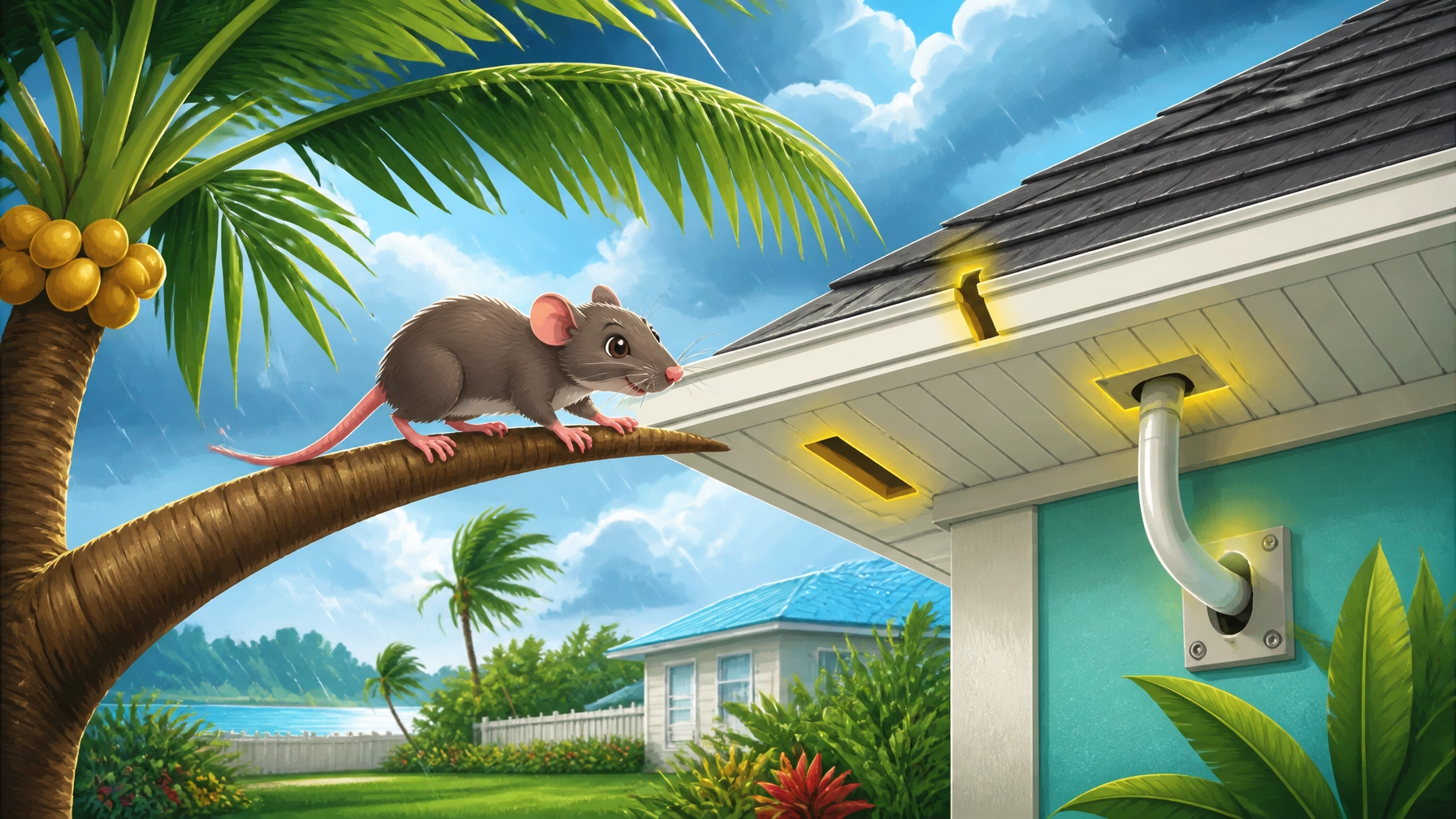
Roof rats, sometimes called palm rats or fruit rats, are well adapted to Florida’s warm climate. They can nest in palm trees, dense landscaping, woodpiles, and roof spaces. They are excellent climbers, which makes attics, soffits, and rooflines especially attractive.
Warm weather supports year-round activity. However, storm season creates additional problems for Sarasota homeowners:
- Heavy rain can disturb nests in trees and outdoor shelters.
- Strong winds may damage soffits, vents, screens, and roofline materials.
- Storm debris can create temporary hiding places around the property.
- Fallen fruit, standing water, and exposed garbage provide food and moisture.
- Rodents may seek dry shelter before or after a tropical storm.
A small gap around a vent, utility line, fascia board, or soffit can become an easy entry point. Once inside, roof rats may nest in insulation and remain hidden for weeks.
For effective rodent control Sarasota properties need more than a quick trap. You must identify the entry point, remove the active population, and reduce the conditions that attract rodents.
What Are the Early Signs of Roof Rats in Your Attic?
Scratching in the attic is one of the first signs many homeowners notice. Roof rats are mainly active around dusk, overnight, and before sunrise, so listen carefully when the house is quiet.
Watch for these additional warning signs:
- Scratching or scurrying overhead
Repeated movement above ceilings often indicates an active nest or travel route. - Droppings in the attic or garage
Roof-rat droppings are typically larger and more tapered than mouse droppings. - Gnaw marks
Rats may chew wood, plastic, insulation, stored items, and electrical wiring. - Disturbed insulation
Look for flattened paths, tunnels, or areas pulled together for nesting. - Grease marks
Dark rub marks may appear along pipes, beams, walls, and entry holes as rats repeatedly travel the same route. - Unusual pet behavior
Dogs and cats may stare at ceilings, sniff around attic access points, or react to sounds you cannot easily hear. - Fruit damage outdoors
Hollowed-out citrus, mangoes, or other fallen fruit can signal roof-rat activity nearby.
The Florida Department of Health’s rodent-control guidance recommends looking for gnawing, droppings, grease stains, tracks, and nesting sites. These signs help confirm activity even when you never see the rat itself.
What Should You Do When You Hear Scratching?
Start with safe observation. Do not climb onto a storm-damaged roof, and do not enter a cramped attic if you are uncomfortable or the area appears contaminated.
From the ground, inspect the roofline for:
- Open or damaged soffit vents
- Gaps around fascia boards
- Broken vent screens
- Loose roofing materials
- Tree branches touching the roof
- Openings around plumbing, electrical, or air-conditioning lines
Inside the attic, use a flashlight and look without touching anything. Do not sweep or vacuum droppings, because contaminated dust can become airborne. Keep children and pets away from the attic access area.
Then schedule an inspection with a licensed exterminator Sarasota homeowners trust. Early action can help limit damage to wiring, insulation, stored belongings, and the structure itself.
Why Does DIY Roof-Rat Control Often Fail?
Store-bought traps and loose poison may appear convenient, but they rarely solve the entire problem. Roof rats are cautious, intelligent, and skilled at avoiding unfamiliar objects. They may also use multiple routes between your roof, attic, trees, and exterior walls.
DIY methods commonly fail for four reasons:
- The entry point remains open. Removing one rat does not stop another from entering.
- Traps are placed in the wrong location. Rats tend to travel along edges, beams, and established routes.
- Poison can create odor problems. A rat that dies inside a wall or attic space may be difficult to locate and remove.
- The attractants remain. Pet food, fallen fruit, clutter, and unsecured trash continue to support activity.
Improperly placed rodenticide can also harm pets, children, wildlife, and other non-target animals. Use caution, follow all product directions, and avoid handling rodents or contaminated materials without proper protection.
Blue Frog recently covered other common rodent-control mistakes Sarasota homeowners make. The biggest lesson is simple: trapping without exclusion is usually a temporary fix.
How Does Blue Frog Solve Roof-Rat Problems?
Blue Frog Lawn & Bugs uses an Integrated Pest Management, or IPM, approach. That means we look at the entire property instead of treating only the sound you hear.
Our professional process may include:
- Thorough inspection
We examine the attic, roofline, soffits, vents, garage, landscaping, and likely travel routes. - Entry-point identification
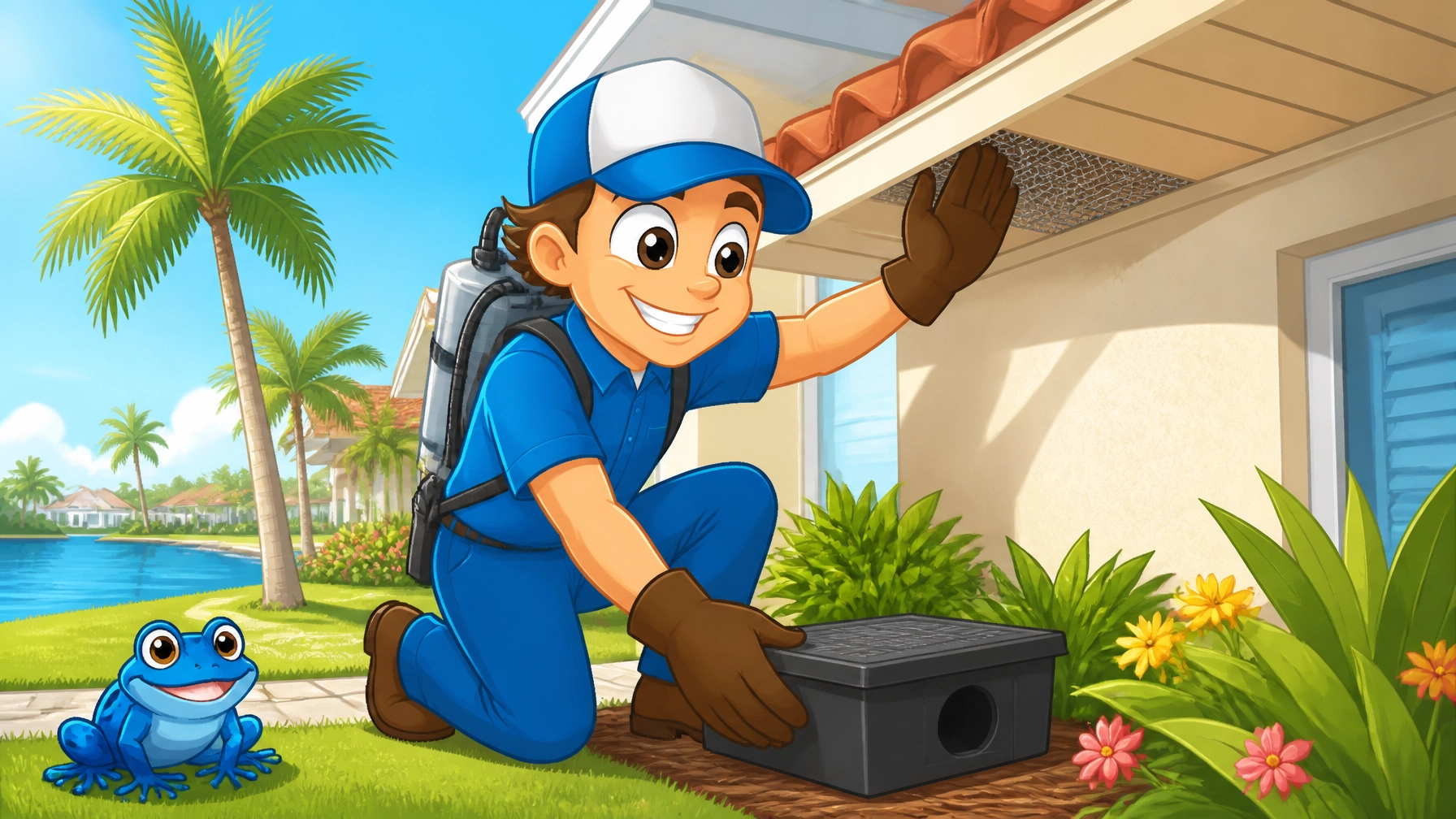
We look for gaps around utility penetrations, roof vents, fascia, soffits, screens, and other vulnerable areas. - Strategic bait-box installation
Our child- and pet-resistant bait boxes are placed carefully around the property to control rodent activity safely and systematically. - Sealing and exclusion
We seal accessible openings with durable, chew-resistant materials. This helps prevent new rodents from moving in after the current activity is controlled. - Sanitation and prevention guidance
We explain how to reduce food, water, and shelter sources around your Sarasota home. - Follow-up protection
We monitor the results and adjust the plan if needed.
This combination is what separates professional rodent control Sarasota service from a quick DIY treatment. We do not simply place bait and leave. We focus on solving the conditions that allowed the rats to enter.
Blue Frog is family-owned and has served Sarasota and surrounding communities since 1996. Our state-licensed, UF-trained team knows the construction details, landscaping patterns, and seasonal pest pressures that affect homes in Sarasota, Bradenton, Venice, Nokomis, and Osprey.
How Can You Prepare Your Sarasota Home for Hurricane Season?
A few practical steps can reduce roof-rat opportunities before the next storm:
✔ Trim tree limbs and vines away from the roofline.
✔ Repair damaged soffits, vents, screens, and fascia.
✔ Seal openings around pipes, wires, and air-conditioning lines.
✔ Store pet food and birdseed in tightly sealed containers.
✔ Remove fallen citrus, mangoes, nuts, and other fruit from the yard.
✔ Keep garbage bins tightly covered.
✔ Move firewood and lumber at least 12 inches off the ground and away from the home.
✔ Remove storm debris, cardboard, and clutter that could provide shelter.
✔ Inspect the attic and roofline after severe weather passes.
These steps support long-term prevention, but they cannot replace an inspection when scratching continues. If you hear activity several nights in a row, treat it as an active warning: not a noise to ignore.
Frequently Asked Questions About Roof Rats in Sarasota
Are roof rats common in Sarasota, Florida?
Yes. Roof rats are well suited to Sarasota’s warm climate and abundant trees, fruit, and residential shelter. They commonly nest in attics, palms, roof spaces, and dense landscaping.
Can roof rats enter through a small opening?
Yes. Roof rats are strong climbers and can use surprisingly small gaps around vents, soffits, rooflines, and utility penetrations. Sealing entry points is essential to lasting control.
Should I use poison if I hear rats in the attic?
Avoid using loose poison in an attic or wall space. A poisoned rat may die somewhere inaccessible and cause a serious odor problem. Professional bait boxes and a complete exclusion plan are safer, more controlled options.
How quickly should I call an exterminator?
Call as soon as you notice repeated scratching, droppings, gnaw marks, or other signs. Prompt exterminator Sarasota service can reduce the risk of wire damage, contaminated insulation, and a growing infestation.
Does Blue Frog offer a guarantee?
Yes. Blue Frog Lawn & Bugs provides a free 48-hour callback guarantee. If the issue is not resolved, we return at no charge to continue addressing the problem.
Stop Attic Scratching Before It Becomes Major Damage
Roof rats do not usually disappear on their own. In Sarasota’s August heat and hurricane season, your attic may look like the perfect refuge: dry, quiet, elevated, and close to food and water sources.
Do not wait for the scratching to become louder or more frequent. Contact Blue Frog Lawn & Bugs for a free, no-obligation estimate and a personalized inspection.
Blue Frog Lawn & Bugs
5372 Catalyst Ave
Sarasota, FL 34233
Phone: (941) 822-0425
Email: lawnandbugs@gmail.com
Choose local rodent control Sarasota homeowners can count on. Request your free estimate today or call Blue Frog at (941) 822-0425.